1348, before the storytelling begins
The Plague Reaches Florence
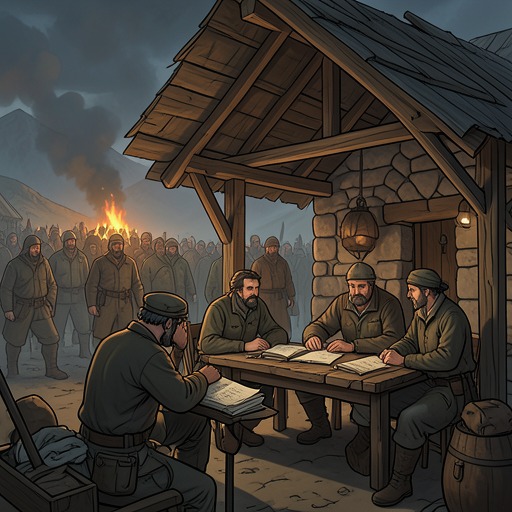
The plague reaches [Florence](entity:location-recall-location-florence-29107dc52cb3), killing people with terrifying speed and spreading through contact with the sick and their belongings. Physicians and public authorities prove unable to stop it, while fear dissolves ordinary care, law, and custom.
The narrator describes deserted homes, abandoned fields, hurried burials, and the isolation of the dying. This catastrophe supplies the reason a small company leaves the city to seek safety and diversion in the countryside.
During the plague, shortly before the first storytelling day
The Women Propose an Escape
Seven young women meet at [Santa Maria Novella](entity:location-recall-location-santa-maria-novella-f2ae279575ec) and discuss the danger and misery surrounding them. [Pampinea](entity:character-recall-character-pampinea-e759fc87a9c6) urges them to leave [Florence](entity:location-recall-location-florence-29107dc52cb3) for a country estate, where they can live safely and pleasantly.
The women worry that a company of women alone may lack guidance. Three young men, including [Pamfilo](entity:character-recall-character-pamfilo-e6de72587667), [Filostrato](entity:character-recall-character-filostrato-f4c5ce234047), and [Dioneo](entity:character-recall-character-dioneo-db27f2a77da6), arrive; the women invite them to join the retreat in a proper and orderly spirit.
The first morning at the country palace
The Company Establishes Its Routine
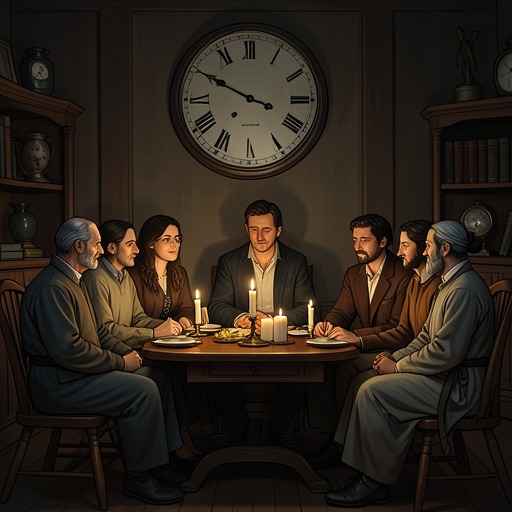
The ten young people reach a furnished palace outside [Florence](entity:location-recall-location-florence-29107dc52cb3). [Pampinea](entity:character-recall-character-pampinea-e759fc87a9c6) is elected queen for the first day, assigns household duties, and directs the company to spend its time in the gardens, eating, music, and recreation.
After their midday rest, she proposes storytelling as a shared amusement. Each person will tell a story, and the company will choose a new ruler for each succeeding day; [Dioneo](entity:character-recall-character-dioneo-db27f2a77da6) receives special permission to tell stories outside the day’s assigned theme.
Day One, first tale
Ciappelletto’s False Confession
[Musciatto Franzesi](entity:character-recall-character-musciatto-franzesi-9128706258ac) entrusts the recovery of debts from troublesome Burgundian merchants to [Ser Ciappelletto](entity:character-recall-character-76f5e1133f10), a notoriously wicked man. Stricken ill while lodging with two Florentine brothers, Ciappelletto hears their fear that his unconfessed death will provoke the townspeople against them.
He gives a friar a fabricated confession, presenting trivial or invented faults as grave sins and concealing his crimes. The friar believes him virtuous; after Ciappelletto dies, the people venerate him as a saint, illustrating how human credulity can mistake fraud for holiness.
Day One, second tale
Abraham Visits Rome
[Jehannot de Chevigné](entity:character-recall-character-jehannot-de-chevign-2ba1bcda5f03) repeatedly urges his Jewish friend [Abraham](entity:character-recall-character-727d149fb3ed) to become Christian. Abraham agrees to inspect the Church’s leadership in [Rome](entity:location-recall-location-rome-3ec0a741c1f4) before deciding, and Jehannot fears that the clergy’s conduct will drive him away from Christianity.
Abraham witnesses corruption and vice among the clergy, yet concludes that a faith which continues to flourish despite such leaders must have divine support. He returns to [Paris](entity:location-recall-location-paris-c02b439ce220) and asks to be baptized, taking the name Giovanni.
Day One, third tale
Melchizedek’s Three Rings
Needing money but unwilling to use force, [Saladin](entity:character-recall-character-2a244613c7c3) asks the wealthy [Melchizedek](entity:character-recall-character-e20ab90018e3) which of three faiths is true. Melchizedek recognizes the trap: whichever faith he favors might give Saladin grounds to punish him.
He tells of a father who leaves one precious ring to each of three sons, making it impossible to determine which ring is genuine. Saladin appreciates the answer, reveals his need, and receives a loan; the two men thereafter remain friends.
Day One, fourth tale
The Monk Exposes the Abbot
A young monk brings a woman into his cell and is discovered by his abbot. He notices the abbot watching and ingeniously leaves the woman locked in the cell while presenting himself as innocent.
The abbot enters intending to investigate, but succumbs to the same desire and sleeps with her. The monk later hints that he witnessed the abbot’s conduct; recognizing their shared guilt, the abbot pardons him and they keep the matter secret.
Day One, fifth tale
The Marchioness Serves Hens
King [Philip II Augustus](entity:character-recall-character-82e30322095b) travels toward [Genoa](entity:location-recall-location-genoa-e7c43cca04b7) intending to visit the [Marchioness of Monferrato](entity:character-recall-character-e0af2a5fad0f) while her husband is away. She understands his desire and prepares a banquet consisting entirely of hens.
When the king asks whether the region produces only hens and no cocks, she replies that women are much the same everywhere, despite differences in rank and dress. He understands the rebuke, abandons his pursuit, and leaves.
Day One, sixth tale
The Inquisitor and the Broth
A wealthy Florentine casually says that Christ might drink his excellent wine. An inquisitor prosecutes him, seeking money rather than genuine correction, and threatens him with burning until the man pays a bribe.
The inquisitor imposes a penance requiring him to attend Mass. The man later points out that the friars’ daily cauldrons of surplus broth would earn them an overwhelming hundredfold reward in the next life, turning their hypocrisy into public ridicule.
Day One, seventh tale
Bergamino Rebukes Cangrande
After [Cangrande della Scala](entity:character-recall-character-3ab1d42026ae) abruptly dismisses the guests gathered for his planned festivities, the storyteller [Bergamino](entity:character-recall-character-c997574a7d3f) is left without payment or dismissal and begins selling his clothes to cover his lodging.
Cangrande asks why he looks so troubled. Bergamino tells how the [Abbot of Cluny](entity:character-recall-character-abbot-of-cluny-db547099fcad) briefly became miserly toward the renowned but poorly dressed poet [Primasso](entity:character-recall-character-ae561db09664), then recognized his own lapse and restored his generosity. Cangrande grasps the hint, pays Bergamino, and gives him a horse and fine clothes.
Day One, eighth tale
Liberality Enters Ermino’s House
[Guglielmo Borsiere](entity:character-recall-character-b150b9ccb2af) visits [Ermino de' Grimaldi](entity:character-recall-character-4ea18ad08451), a wealthy Genoese merchant notorious for avarice. Ermino asks him to name something never yet seen that he might have painted in his new house.
Borsiere replies, “Liberality.” Ashamed by the pointed answer, Ermino changes his conduct and becomes notably generous and hospitable.
Day One, ninth tale
The Gascon Lady Rebukes a King
A Gascon pilgrim is mistreated in [Cyprus](entity:location-recall-location-cyprus-f0261af0f810) and learns that the king is too cowardly to redress even insults against himself. She goes before him, saying she seeks no remedy but wants to learn how he endures the affronts he suffers.
Her words awaken the king’s courage. He punishes those who wronged her and thereafter vigorously defends the honor of his crown.
Day One, tenth tale
Alberto Answers the Ladies
The elderly physician Alberto of [Bologna](entity:location-recall-location-bologna-e9b2b10db055) falls in love with the beautiful widow [Malgherida de' Ghisolieri](entity:character-recall-character-1af608ef2f97). She and her companions invite him in, then tease him for loving when younger and handsomer men court her.
Alberto replies that the ladies resemble women who choose the useless leaves of leeks and discard the tastier head, suggesting they may similarly overlook the best lover. The women are embarrassed, and the would-be mockery rebounds upon them.
After Day One, before the second day’s tales
The Second Day’s Theme
At the close of her reign, [Pampinea](entity:character-recall-character-pampinea-e759fc87a9c6) crowns [Filomena](entity:character-recall-character-filomena-15029bd89a54). The company keeps its routine of meals, recreation, and stories, with Filomena setting the day’s subject: people who, after being baffled by various misfortunes, reach a joyful outcome beyond their hopes.
The theme frames a series of tales in which chance, ingenuity, endurance, and unexpected help redirect people’s fortunes.
Day Two, first tale
Martellino Fakes a Cure
At [Treviso](entity:location-recall-location-treviso-ae81b38c72e0), [Martellino](entity:character-recall-character-882b0942008d) pretends to be crippled so that he and his companions [Stecchi](entity:character-recall-character-b9063d31917c) and [Marchese](entity:character-recall-character-4f44a88d5b34) can reach the body of the supposedly holy Arrigo. His staged recovery initially convinces the crowd, but a Florentine recognizes him and exposes the trick.
The crowd beats him, and Marchese invents a purse theft to get him into official custody rather than leave him to be killed. The prince hears the truth, laughs at the mishap, and releases the three men with new clothes.
Day Two, second tale
Rinaldo Is Robbed
On his journey from [Bologna](entity:location-recall-location-bologna-e9b2b10db055), [Rinaldo d'Asti](entity:character-recall-character-rinaldo-d-asti-458696b5909e) joins three highwaymen who pretend to be honest travelers. They rob him near [Castel Guglielmo](entity:location-recall-location-castel-guglielmo-d28ca4e2e1d8) and leave him barefoot and in his shirt in the cold.
A widow shelters him, warms him, and gives him clothes and money; the robbers are later captured, allowing him to recover his property. He returns home safe, having survived through fortune and hospitality.
Day Two, third tale
The Brothers Lose Their Fortune
Three Florentine brothers squander their inherited wealth, rebuild it through lending in [England](entity:location-recall-location-england-b153c1f368ea), and then spend recklessly again while depending on money sent by their nephew [Alessandro](entity:character-recall-character-alessandro-64c38875a4fb). Civil war between the English king and his son destroys the brothers’ income and leaves them imprisoned for debt.
Alessandro returns to [Italy](entity:location-recall-location-italy-85c2492cd54b) and meets an English abbot who is actually the king’s daughter traveling in disguise. She marries him, secures the brothers’ release and restoration, and helps him regain favor at court; he later rises to high rank.
Day Two, fourth tale
Landolfo Turns to Piracy
[Landolfo Ruffolo](entity:character-recall-character-landolfo-ruffolo-875e1cd088f2) loses much of his fortune when he takes merchandise to [Cyprus](entity:location-recall-location-cyprus-f0261af0f810) and finds the market flooded. Rather than return poor, he sells his ship, buys a small vessel, and becomes a corsair, amassing wealth from captured Turkish ships.
On his homeward journey, Genoese seize his vessel; a storm wrecks their ship, and Landolfo survives by clinging to a floating chest filled with jewels. A woman on [Corfu](entity:location-recall-location-corfu-947439dbef20) rescues him, and he returns home wealthy, rewarding those who helped him.
Day Two, fifth tale
Andreuccio Is Deceived
[Andreuccio di Pietro](entity:character-recall-character-andreuccio-di-pietr-f8354580e291) comes to [Naples](entity:location-recall-location-naples-13ce8e2c4961) to buy horses, openly displaying his money. [Fiordaliso](entity:character-recall-character-fiordaliso-42588cb9327b), a courtesan, learns his identity through an old acquaintance and tricks him into believing she is his sister, then steals his purse after he falls into a privy.
Lost in the city, he joins thieves planning to rob an archbishop’s tomb. He is trapped inside, escapes when another group of thieves is frightened away, and returns to [Perugia](entity:location-recall-location-perugia-1cc190912c09) with a valuable ruby ring.
Day Two, sixth tale
Beritola Loses Her Family
After the defeat of [Manfred](entity:character-recall-character-58a4947b7062), [Beritola Caracciola](entity:character-recall-character-beritola-caracciola-5f1e4d860cb5) flees [Sicily](entity:location-recall-location-sicily-8d99f798a76e) with her sons, but pirates seize the children while she is alone on [Ponza](entity:location-recall-location-ponza-bed0f64a6602). She lives as a castaway with two young goats until [Currado Malespina](entity:character-recall-character-currado-malespina-24f2b3888d14)’s party finds her and brings her to safety.
Her sons are separated into servitude and travel, while the elder, using the name Giannotto, becomes a servant in Currado’s household. He falls in love with Currado’s daughter [Spina](entity:character-recall-character-spina-0dda071c7679), and they are imprisoned after being discovered together.
Day Two, sixth tale, after Giannotto’s imprisonment
Giusfredi Is Recognized
The Sicilian revolt against Charles I reaches Currado’s lands. Giannotto, hearing the news, reveals to his gaoler that he is Giusfredi, son of [Arrighetto Capece](entity:character-recall-character-arrighetto-capece-33b330197bff), and Currado confirms his identity with Beritola.
Currado releases the lovers and gives [Spina](entity:character-recall-character-spina-0dda071c7679) to Giusfredi in marriage. A search finds the younger brother and news of Arrighetto; the family reunites in [Sicily](entity:location-recall-location-sicily-8d99f798a76e), where their status and possessions are restored.
Day Two, seventh tale
Alatiel’s Shipwreck

[Alatiel](entity:character-recall-character-alatiel-fef0c5125d4f), daughter of the Soldan of Babylon, sails to marry the King of [Algarve](entity:location-recall-location-algarve-14652849fd82), but a storm wrecks her ship near [Majorca](entity:location-recall-location-majorca-47b8e801172d). Rescued by [Pericone da Visalgo](entity:character-recall-character-pericone-da-visalgo-115b2e0ad899), she becomes his lover; his brother [Marato](entity:character-recall-character-marato-f338f9e2119b) then kills him and carries her away.
The ship’s Genoese masters kill Marato in a quarrel over her, and she passes to the [Prince of the Morea](entity:character-recall-character-126fc090a50d), then the [Duke of Athens](entity:character-recall-character-df4d0c9f96f4), who murders his own kinsman to seize her. She is subsequently captured by [Osbech](entity:character-recall-character-osbech-acca29793150), becomes the lover of [Antiochus](entity:character-recall-character-antiochus-b1680e0150b4), and eventually meets [Antigonus of Famagosta](entity:character-recall-character-antigonus-of-famago-9be057cda7b5), who helps return her to her father, from whom she proceeds to marry the King of Algarve.
Day Two, eighth tale
The Count of Antwerp Is Exiled
While the French king is away, the queen’s daughter-in-law falsely accuses [Gautier of Antwerp](entity:character-recall-character-gautier-of-antwerp-7cbc3a8c1eac) of attempting to assault her after he rejects her advances. Gautier flees with his children, [Louis](entity:character-recall-character-louis-b60a54ea5311) and [Violante](entity:character-recall-character-violante-f256c41a8c36), to [England](entity:location-recall-location-england-b153c1f368ea), where he separates them for safety and lives in poverty under another identity.
His children grow up in noble households, while Gautier serves as a horseboy. Years later, the queen confesses the false accusation before her death, and the French king announces rewards for news of the innocent count and his children.
Day Two, eighth tale, years after the exile
The Count’s Family Is Restored
Gautier learns that his children are alive and prospering: Perrot, as [Louis](entity:character-recall-character-louis-b60a54ea5311) is known, has become an English marshal, and [Violante](entity:character-recall-character-violante-f256c41a8c36) has married [Jamy Lamiens](entity:character-recall-character-jamy-lamiens-0264a47105f2). He reveals his identity when the French king’s announcement offers a reward for the exiled family.
The king restores Gautier to his rank and honors him and his children. Jamy receives the promised reward, and the family is reunited after years of separation.
Day Two, ninth tale
Ginevra’s Chastity Is Tested
At a [Paris](entity:location-recall-location-paris-c02b439ce220) inn, [Ambrogiuolo of Piacenza](entity:character-recall-character-ambrogiuolo-of-piac-f299966a420c) mocks [Bernabo Lomellini](entity:character-recall-character-bernabo-lomellini-8ecd4832e0c6)’s confidence in his wife [Ginevra](entity:character-recall-character-ginevra-7283f8abb60e)’s virtue. The two wager money on whether [Ambrogiuolo](entity:character-recall-character-ambrogiuolo-d43616166106) can seduce her, and Ambrogiuolo secretly hides in a chest and enters her chamber at night.
He observes the room, steals personal objects, and discovers a distinctive mole on Ginevra’s body. He returns to Paris and uses these details to convince Bernabo that he won the wager, even though Ginevra never yielded to him.
Day Two, ninth tale, after the wager
Ginevra Escapes Murder
Believing [Ambrogiuolo](entity:character-recall-character-ambrogiuolo-d43616166106)’s false proof, Bernabo orders a servant to kill [Ginevra](entity:character-recall-character-ginevra-7283f8abb60e). The servant takes pity on her and lets her escape in disguise, while Bernabo falsely reports that she has been killed.
Ginevra becomes a man called Sicurano, enters the service of the Soldan, and eventually recognizes Ambrogiuolo in [Alexandria](entity:location-recall-location-alexandria-2b4cb64effda). She draws him and Bernabo before the Soldan, exposes the fraud, and is reunited with her husband; Ambrogiuolo is executed and Ginevra returns to [Genoa](entity:location-recall-location-genoa-e7c43cca04b7) rich and honored.
Day Two, tenth tale
Bartolomea Refuses to Return
[Paganino da Mare](entity:character-recall-character-paganino-da-mare-dc8c49f90da7) carries off [Bartolomea](entity:character-recall-character-bartolomea-f67ccfade859) while she is at sea with her husband, [Ricciardo di Chinzica](entity:character-recall-character-ricciardo-di-chinzi-70fef0d409d5). He takes her to [Monaco](entity:location-recall-location-monaco-d9b1b705c395) and treats her as a wife, while Ricciardo eventually travels there hoping to ransom her.
Bartolomea refuses to return, explaining that her husband’s calendars and fasts left her unsatisfied while Paganino gives her the companionship she wants. Ricciardo returns to [Pisa](entity:location-recall-location-pisa-62234cf92f7b) in despair and dies; Bartolomea marries Paganino.
After Day Two, before the third day’s tales
The Third Day’s Theme
[Neifile](entity:character-recall-character-neifile-18e7f707ce8e) receives the crown and announces that [Friday](entity:time-recall-time-friday-6b74f72aeb7a) and [Saturday](entity:time-recall-time-saturday-26079b8bc97c) will be days of rest from storytelling. On [Sunday](entity:time-recall-time-sunday-073632221971) the company moves to a new palace, whose carefully planted gardens, fountains, and streams delight them.
Neifile sets the day’s theme: people who, through their own diligence, acquire a much-desired thing or recover a lost good. The tales that follow focus on ingenuity, pursuit, and opportunity.
Day Three, first tale
Masetto Enters the Nunnery
[Masetto of Lamporecchio](entity:character-recall-character-masetto-of-lamporec-6222ca9991cc) learns that a convent needs a gardener and pretends to be mute so the nuns will hire him. The young nuns discover his sexual ability and secretly take turns with him; eventually even the abbess joins them.
When the demands become too much, Masetto reveals that he can speak. The women devise a story that his speech has returned through prayer, appoint him bailiff, and manage his work so he can remain. He later leaves wealthy and with children.
Day Three, second tale
The Groom Impersonates Agilulf
A horsekeeper becomes enamored of Queen [Theodolinda](entity:character-recall-character-theodolinda-619aee9ada63) and learns how [Agilulf](entity:character-recall-character-agilulf-55a599617134) enters her chamber at night. Disguised as the king, he slips into her bed and sleeps with her without being recognized.
Agilulf returns unexpectedly, realizes what has happened, and searches the servants by feeling their heartbeats. He identifies the culprit and cuts his hair as a private mark, but the groom cuts the hair of everyone else too; the king understands the trick and silently warns the household not to repeat it.
Day Three, third tale
The Confession Tryst
A Florentine lady claims in confession that a gentleman is pursuing her, although she is actually enamored of him. A simple friar believes her and rebukes the gentleman, who understands the trick and begins to court her discreetly.
The lady returns to confession with fabricated reports of the man’s advances, using the friar’s intervention to signal her desire and arrange a meeting. The friar repeatedly carries her messages without realizing that he is helping the lovers.
Day Three, fourth tale
The False Penance
[Dom Felice](entity:character-recall-character-dom-felice-0521c7b41775) persuades Fra Puccio that a severe nightly penance will bring him toward beatitude. The regimen requires Puccio to stand motionless for hours, while Felice visits Puccio’s wife [Isabetta](entity:character-recall-character-isabetta-4623ad20e9d9) and sleeps with her.
When Puccio complains of the shaking house, Isabetta makes him believe it is caused by her tossing in bed. The affair continues under the cover of his penance, and the couple later present their child as Puccio’s.
Day Three, fifth tale
Zima Wins a Promise
[Ricciardo il Zima](entity:character-recall-character-ricciardo-il-zima-ea5193ceea14) gives [Francesco Vergellesi](entity:character-recall-character-francesco-vergelles-976dd6924ed0) a fine palfrey in exchange for permission to speak privately with Francesco’s wife. Francesco tells her not to answer Zima, expecting to frustrate him.
Zima speaks for himself and then invents the wife’s replies, including a promise of a secret meeting after Francesco leaves for [Milan](entity:location-recall-location-milan-15a5d3d0bc36). The lady is moved by his words and later sends the agreed signal; Zima visits her and their affair begins.
Day Three, sixth tale
Ricciardo Tricks Catella
[Ricciardo Minutolo](entity:character-recall-character-ricciardo-minutolo-3d3630e68595) loves [Catella](entity:character-recall-character-catella-db85195bbe99), who is intensely jealous of her husband, [Filippello Fighinolfi](entity:character-recall-character-filippello-fighinol-d1d9290e8cf1). He invents a story that Filippello plans to meet another woman at a bathhouse and persuades Catella to go there secretly.
In the darkness, Catella believes Ricciardo is her husband and sleeps with him. When he reveals himself, she is furious but fears scandal; after he persuades her to keep quiet, she forgives him and continues the affair.
Day Three, seventh tale
Tedaldo Returns in Disguise
After Madam [Ermellina](entity:character-recall-character-ermellina-7ac0aecda45f) rejects him, [Tedaldo Elisei](entity:character-recall-character-tedaldo-elisei-5b539a35c992) leaves [Florence](entity:location-recall-location-florence-29107dc52cb3) and lives for years under another name as a merchant. Returning disguised as a pilgrim, he learns that [Aldobrandino Palermini](entity:character-recall-character-aldobrandino-palerm-7d19b38b187c) has been condemned for the supposed murder of Tedaldo, whose body was actually that of another man.
Tedaldo questions Ermellina, learns that a friar’s warning caused their estrangement, and reveals himself. He identifies the real killers, secures Aldobrandino’s release, and arranges reconciliation between the husband and Tedaldo’s brothers.
Day Three, eighth tale
Ferondo Is Made to Seem Dead
An abbot becomes enamored of [Ferondo](entity:character-recall-character-ferondo-d8acc7b8f516)’s wife and gives Ferondo a drug that induces a deathlike sleep. He has Ferondo buried and secretly moved to a dungeon, where a monk beats him and convinces him that he is in purgatory.
The abbot visits the wife while Ferondo is hidden away. When she becomes pregnant, he gives Ferondo another dose and returns him to his tomb, from which he awakens and is welcomed back as a man raised from the dead.
Day Three, ninth tale
Giletta Cures the King
Giletta de Narbonne learns that the King of [France](entity:location-recall-location-france-f5cafc8a8ad4) suffers from a fistula that physicians cannot cure. Using medical knowledge inherited from her father, she heals him and asks in reward to marry [Bertrand de Roussillon](entity:character-recall-character-bertrand-de-roussil-d7c50bfee683), whom she has loved since childhood.
The king fulfills his promise, though Bertrand resents the marriage and leaves Giletta in Roussillon. She governs his lands capably and later follows him to [Florence](entity:location-recall-location-florence-29107dc52cb3), determined to meet the conditions he has set for accepting her as his wife.
Day Three, tenth tale
Alibech Meets Rustico
[Alibech](entity:character-recall-character-alibech-5bc393bccba9), a young girl from [Capsa](entity:location-recall-location-e8136ad01711), travels into the desert hoping to serve God. A hermit, [Rustico](entity:character-recall-character-rustico-c3507b3048f7), receives her and persuades her that sexual intercourse is the way to put the [Devil](entity:creature-recall-creature-1af522e7bfa3) in Hell; Alibech accepts the explanation and soon finds the activity pleasurable.
After a fire kills her family, she inherits wealth. [Neerbale](entity:character-recall-character-neerbale-b548d799ea21) brings her back from the desert and marries her; when women ask how she served God, her account gives rise to the comic expression about putting the Devil in Hell.
After Day Three, before the fourth day’s tales
The Fourth Day’s Theme
[Filostrato](entity:character-recall-character-filostrato-f4c5ce234047) takes the crown and chooses a painful theme: lovers whose affairs end unhappily. He explains that his own experience of love has been unhappy and wants the day’s stories to reflect that state of mind.
The narrator interrupts the frame to defend his writing about women against critics who accuse him of excessive affection for them, unsuitable subject matter, or idleness. He invokes natural desire and the example of a sheltered youth who, on seeing women, asks his father for a “green goose.”
Day Four, first tale
Tancredi Kills Guiscardo
[Ghismonda](entity:character-recall-character-ghismonda-6df360de8d96), daughter of [Tancred](entity:character-recall-character-tancred-4b0ddcea54af), falls in love with [Guiscardo](entity:character-recall-character-guiscardo-37413cff3806), a man of humble birth whom she judges noble in virtue. They meet secretly through a passage into a cave beneath her chamber.
Tancred discovers them and captures Guiscardo. He has him killed and sends Ghismonda his heart in a golden bowl; she pours poison over it, drinks, and dies, asking that she be buried beside her lover.
Day Four, second tale
Fra Alberto Deceives Lisetta
Fra Alberto, a corrupt friar, tells the vain [Lisetta](entity:character-recall-character-a482017201f4) that the Angel Gabriel loves her and has beaten him for insulting her beauty. He claims Gabriel will visit her in human form, then disguises himself as the angel and sleeps with her.
Lisetta boasts to another woman that Gabriel is her lover, and the story spreads through [Venice](entity:location-recall-location-519cfa9fe115). When her brothers-in-law catch wind of it, Fra Alberto escapes through a window into a canal and is later exposed, paraded as a wild man, and imprisoned.
Day Four, third tale
The Lovers Flee to Crete
Three sisters, [Ninetta](entity:character-recall-character-ninetta-b765d61bbbd7), [Maddalena](entity:character-recall-character-maddalena-93dd5f0c11c2), and [Bertella](entity:character-recall-character-bertella-13be56dc2222), elope with [Restagnone](entity:character-recall-character-restagnone-94425ed0ad0d), [Folco](entity:character-recall-character-folco-0198eabad0b8), and [Ughetto](entity:character-recall-character-ughetto-7dc69431cda3) to [Crete](entity:location-recall-location-crete-db0e67d7a50e), taking their father’s money. Their new life begins in comfort, but Restagnone falls for another woman, and Ninetta poisons him in jealousy.
Maddalena yields to the Duke of Crete to save Ninetta from execution. Folco discovers the bargain, kills Maddalena, and flees with Ninetta; meanwhile Ughetto and Bertella are falsely accused, bribe their guards, and escape to [Rhodes](entity:location-recall-location-rhodes-bccc113c87e2), where they die poor.
Day Four, seventh tale
Simona and Pasquino Die
[Simona](entity:character-recall-character-simona-846938e531c0), a poor wool-spinner, and [Pasquino](entity:character-recall-character-pasquino-4dbd13d0df65), a wool-worker, become lovers and arrange to meet in a garden. Pasquino rubs a sage leaf against his teeth and suddenly dies, his body swelling and darkening.
Accused of poisoning him, Simona tries to demonstrate how he died by rubbing another leaf against her teeth. She dies in the same way; a poisonous toad beneath the sage is discovered, explaining both deaths.
Day Four, eighth tale
Girolamo Finds Salvestra Married
[Girolamo](entity:character-recall-character-girolamo-6abe3885547c)’s mother sends him away to [Paris](entity:location-recall-location-paris-c02b439ce220) to end his childhood love for [Salvestra](entity:character-recall-character-salvestra-16d1149cf584). After returning, he finds her married to a tent-maker and cannot persuade her to renew their relationship.
He secretly enters her home and lies beside her, but dies without waking her. When she discovers his body, she asks her husband what should be done and then dies beside Girolamo at his funeral, leaving the two lovers buried together.
Day Four, ninth tale
The Count Serves a Lover’s Heart
[Guillaume de Guardestaing](entity:character-recall-character-guillaume-de-guarde-501f6c8e002b) falls in love with the wife of his friend [Guillaume de Roussillon](entity:character-recall-character-guillaume-de-roussi-c3fecd288b4b), and she returns his love. Roussillon discovers their affair, kills Guardestaing, and removes his heart.
He has the heart cooked and serves it to his wife, then reveals what she has eaten. She declares that such food deserves no lesser tomb than her body and throws herself from a window, dying; the lovers are buried together.
Day Four, tenth tale
Ruggieri Is Hidden in a Chest
A physician’s wife takes [Ruggieri da Jeroli](entity:character-recall-character-ruggieri-da-jeroli-a131a05a5b4f) as her lover. When her husband unexpectedly returns, she and her maid believe Ruggieri is dead after he drinks a sleeping draught prepared for a patient, and hide him in a chest.
Two moneylenders steal the chest, and Ruggieri wakes inside their house. He is arrested as a burglar, but the maid tells the authorities what happened; the truth is established, Ruggieri is freed, and the thieves are fined.
After Day Four, before the fifth day’s tales
The Fifth Day’s Theme
[Fiammetta](entity:character-recall-character-fiammetta-012893d9940f) receives the crown and sets a happier subject: lovers who, after cruel and unfortunate adventures, reach a happy ending. The company leaves its previous day of tragic love behind and spends the morning in a new palace and garden.
The theme structures stories in which love survives shipwreck, separation, capture, poverty, or social barriers, often through good fortune and determined action.
Day Five, first tale
Cimon Is Transformed by Love
[Cimon](entity:character-recall-character-cimon-cec16e790540), the dull son of [Aristippus](entity:character-recall-character-aristippus-c2baeccd60b6), sees [Iphigenia](entity:character-recall-character-iphigenia-6cf12886535c) sleeping in a forest clearing and is transformed by love. He becomes learned, courteous, and accomplished, then asks for her hand; her father refuses because she is promised to [Pasimondas](entity:character-recall-character-pasimondas-02d7ff68f538).
When Iphigenia sails for [Rhodes](entity:location-recall-location-rhodes-bccc113c87e2), Cimon attacks the ship and carries her off. A storm drives him back to Rhodes, where he is captured, but [Lysimachus](entity:character-recall-character-lysimachus-4494eb3d10a0) later helps him escape and together they abduct Iphigenia and [Cassandra](entity:character-recall-character-cassandra-64055e2aac8a) on their wedding day.
Day Five, second tale
Costanza Reunites with Martuccio
[Costanza](entity:character-recall-character-costanza-a23c36f04d5a) loves [Martuccio Gomito](entity:character-recall-character-martuccio-gomito-9200f9f772f1), who leaves [Lipari](entity:location-recall-location-lipari-ef3406571c7f) to seek wealth as a corsair. He is captured by the Saracens and imprisoned in [Tunis](entity:location-recall-location-tunis-661cf265ab1c); news of his death drives Costanza to set out alone in a boat, hoping to die at sea.
The boat carries her safely to [Susa](entity:location-recall-location-susa-85b51bc5226d), where a compassionate woman shelters her. Martuccio’s counsel helps the King of Tunis win a war, raising him to favor; Costanza learns he is alive, joins him, and the king enables their marriage and return to Lipari.
Day Five, third tale
Pietro and Agnolella Are Reunited
[Pietro Boccamazza](entity:character-recall-character-pietro-boccamazza-4d9ea48ea3fc) elopes with [Agnolella](entity:character-recall-character-agnolella-6c9e94bc117b) despite opposition from his family. They take a wrong road and meet armed men; Agnolella escapes into a forest while Pietro is captured, then flees his captors during an attack by another band.
Separated and believing each other lost, they endure a night of danger and fear. Both reach the estate of Lionello di Campodifiore, whose wife reunites them and helps secure their marriage and eventual reconciliation with Pietro’s family.
Day Five, fourth tale
Ricciardo Marries Caterina
[Ricciardo Manardi](entity:character-recall-character-ricciardo-manardi-b183be8e9707) and [Caterina](entity:character-recall-character-caterina-1ee46ece212c) fall in love and are discovered together by her father, [Messer Lizio da Valbona](entity:character-recall-character-messer-lizio-da-val-ca396672c473). Rather than punish them, Lizio demands that Ricciardo marry Caterina.
Ricciardo agrees, and Lizio gives the couple his blessing. Their marriage turns the young lovers’ secret affair into an accepted family bond.
Day Five, fifth tale
Agnesa’s Identity Is Revealed
[Guidotto da Cremona](entity:character-recall-character-guidotto-da-cremona-f89320587ca5) leaves his adopted daughter to [Giacomino da Pavia](entity:character-recall-character-giacomino-da-pavia-cca7a8520562), who raises her at [Faenza](entity:location-recall-location-faenza-7c724a0351bc). [Giannole di Severino](entity:character-recall-character-giannole-di-severin-2e661e0d4009) and [Minghino di Mingole](entity:character-recall-character-minghino-di-mingole-ada3618c9936) both fall in love with her and their rivalry erupts into a fight when they each attempt to seize her.
Her birth father, [Bernabuccio](entity:character-recall-character-bernabuccio-f788592a0900), recognizes her by a scar and reveals that she was lost as a child during the sack of Faenza. The lovers’ rivalry ends when [Agnesa](entity:character-recall-character-agnesa-59e8b3e9c970) is given in marriage to Minghino.
Day Five, sixth tale
Gianni and Restituta Are Spared
[Gianni di Procida](entity:character-recall-character-gianni-di-procida-a2ce91a99347) loves [Restituta](entity:character-recall-character-restituta-4c50c4259791), who is abducted by young men from [Sicily](entity:location-recall-location-sicily-8d99f798a76e) and presented to [Frederick, King of Sicily](entity:character-recall-character-frederick-king-of-s-1ca3388dde78). Gianni follows her to [Palermo](entity:location-recall-location-palermo-b16a2f0e892c) and secretly reaches her while she is lodged at [La Cuba](entity:location-recall-location-la-cuba-f7ef13dab5c3).
They are discovered together and condemned to be burned. Ruggieri dell’Oria recognizes Gianni and explains his identity and family; the king rescinds the sentence, restores the pair’s honor, and allows them to marry.
Day Five, seventh tale
Teodoro Is Recognized
[Teodoro](entity:character-recall-character-teodoro-9205369e0b58), believed to be a Turkish slave, grows up in [Messer Amerigo Abate](entity:character-recall-character-messer-amerigo-abat-5120ca08351d)’s household and falls in love with his daughter [Violante](entity:character-recall-character-violante-f256c41a8c36). She becomes pregnant, and when her father discovers the truth, Teodoro is condemned to die.
As Teodoro is led to execution, the Armenian ambassador [Fineo](entity:character-recall-character-fineo-018018a82a96) recognizes him as his long-lost son by a distinctive birthmark. The families reconcile, Teodoro marries Violante, and their child is accepted into the family.
Day Five, eighth tale
Nastagio Sees the Cursed Hunt
[Nastagio degli Onesti](entity:character-recall-character-nastagio-degli-ones-d4769e824a40) spends his fortune pursuing a proud woman of the Traversari family who rejects him. At [Chiassi](entity:location-recall-location-chiassi-00378c0dfe71) he sees a supernatural horseman, [Guido degli Anastagi](entity:character-recall-character-guido-degli-anastag-03b545a27ef4), chase and kill a woman who had rejected him in life, after which dogs tear at her body.
Nastagio learns that the pair must repeat this punishment each [Friday](entity:time-recall-time-friday-6b74f72aeb7a). He arranges a banquet for his beloved and her family at the site; when she witnesses the spectacle, she fears a similar fate and agrees to marry him.
Day Five, ninth tale
Federigo Sacrifices His Falcon
[Federigo degli Alberighi](entity:character-recall-character-federigo-degli-albe-98a3f9b5e569) spends his wealth trying to win [Madam Giovanna](entity:character-recall-character-madam-giovanna-f43b066ec9c2), then lives in poverty with only his beloved falcon remaining. After her son becomes ill and asks to see the bird, Giovanna visits Federigo intending to request it.
Having no other food worthy of his guest, Federigo cooks and serves the falcon. When she learns this, she is moved by his generosity; after her son dies, she marries Federigo and brings him her wealth.
Day Five, tenth tale
Pietro’s Wife Hides Her Lover
[Pietro di Vinciolo](entity:character-recall-character-pietro-di-vinciolo-603636333fd6) goes out to supper, and his wife arranges for a young lover to visit her. Pietro returns unexpectedly, so she hides the youth beneath a hen-coop.
Pietro recounts finding a young man in another husband’s house, then a donkey steps on the hidden lover’s fingers and makes him cry out. The affair is exposed, but Pietro ultimately accepts the situation for his own private purposes.
After Day Five, before the sixth day’s tales
The Sixth Day’s Theme
[Elisa](entity:character-recall-character-elisa-4269f811fdbe) takes the crown and chooses stories about people who escape loss, danger, or shame through a witty saying or a quick, fitting response. The theme shifts the gathering from tragic and romantic reversals toward verbal ingenuity.
The company again spends its time in the countryside, then assembles to tell stories in the shade. The ensuing tales test the power of speech to deflect danger, expose folly, or change another person’s mind.
Day Six, first tale
Oretta Leaves a Bad Story
A gentleman offers to carry [Madam Oretta](entity:character-recall-character-madam-oretta-37ce28df41e6) on horseback by telling her a story. His tale is disordered by repeated words, mistakes, and clumsy narration.
Oretta politely tells him that his horse trots too roughly and asks him to set her down. The witty remark ends the story and gently exposes the teller’s failure.
Day Six, second tale
Cisti Offers Wine
[Cisti the baker](entity:character-recall-character-cisti-the-baker-5c3ea932025e) sees [Messer Geri Spina](entity:character-recall-character-messer-geri-spina-73c384280c19) and the pope’s ambassadors pass his shop each day. He serves his excellent wine with such tact that Geri asks to taste it and comes to appreciate him.
When Geri later sends a servant with an oversized flask, Cisti says the servant has come to the wrong place. Geri understands the subtle rebuke, sends a suitable container, and recognizes Cisti’s refinement.
Day Six, third tale
Nonna Rebukes the Bishop
Bishop [Antonio d'Orso](entity:character-recall-character-antonio-d-orso-1eac3d076f90) makes an immodest remark to the young [Nonna de' Pulci](entity:character-recall-character-nonna-de-pulci-0ee1a2ca10e7) while they watch a procession. Nonna answers with a quick retort that turns the implication back on him.
The bishop falls silent and the people around them recognize how neatly she has answered his attempted jest.
Day Six, fourth tale
Chichibio Saves Himself
[Chichibio](entity:character-recall-character-chichibio-1b34bedde2a0), cook to [Currado Gianfigliazzi](entity:character-recall-character-currado-gianfigliaz-c189c3b1b1d9), gives a crane’s leg to Brunetta, the woman he loves. When Currado sees the missing leg, Chichibio claims that cranes have only one.
The next morning Currado points out cranes standing on one leg and shouts, making them lower the other. Chichibio says Currado failed to shout at the cooked bird; Currado laughs, and his anger dissolves.
Day Six, fifth tale
Giotto Answers Forese
Returning together from [Mugello](entity:location-recall-location-mugello-671221bc3b1f), the painter [Giotto](entity:character-recall-character-giotto-b3ce244e0b3d) and the lawyer [Forese da Rabatta](entity:character-recall-character-forese-da-rabatta-cc72adf8641b) are caught in rain and forced to wear shabby borrowed clothes. Forese jokes that Giotto looks too poorly dressed to be the greatest painter in the world.
Giotto promptly replies that Forese, looking as he does, would scarcely be believed to know his alphabet. Forese recognizes the rebuke and accepts the joke.
Day Six, sixth tale
Scalza Wins a Supper
[Michele Scalza](entity:character-recall-character-michele-scalza-f9f34011e840) claims that the Baronci, a Florentine family noted for their irregular faces, are the oldest and noblest gentlemen in the world. His companions challenge him to prove the claim for a supper.
Scalza argues that God created the Baronci while still learning to draw, before making the rest of mankind with greater skill. The judge and company accept the comic argument and award him the supper.
Day Six, seventh tale
Filippa Changes the Law
[Madam Filippa](entity:character-recall-character-madam-filippa-6c09e6a03fa6) is found by her husband with a lover and brought before a court under a statute that condemns adulterous wives to death. She freely admits the affair but asks whether her husband has always been satisfied by her.
When he admits that he has been, Filippa argues that she should be free to give her surplus affection elsewhere. The crowd approves, and the statute is changed to punish women only when they take money for sex.
Day Six, eighth tale
Fresco Warns Ciesca
[Ciesca](entity:character-recall-character-ciesca-2688135e7fe5) complains to her uncle [Fresco da Celatico](entity:character-recall-character-fresco-da-celatico-60f6174dff0f) that she finds everyone disagreeable and tiresome. Fresco advises her not to look in a mirror if she dislikes seeing disagreeable people.
Ciesca fails to understand that he means her own appearance and manner, leaving the rebuke to expose her vanity and lack of wit.
Day Six, ninth tale
Cavalcanti Escapes the Gentlemen
A group of Florentine gentlemen riding near the tombs of San Giovanni accost [Guido Cavalcanti](entity:character-recall-character-guido-cavalcanti-09ecc06f1a87), known for his learning and philosophical opinions. They ask how, if God does not exist, he will have accomplished anything.
Guido answers that they may say whatever they wish in their own house, then leaps over a tomb and escapes. Messer Betto explains that the tombs are the houses of the dead and that Guido has called the ignorant men dead in comparison with learned people.
Day Six, tenth tale
Fra Cipolla Substitutes Coals
[Fra Cipolla](entity:character-recall-character-fra-cipolla-c55472e90f6d) promises the people of [Certaldo](entity:location-recall-location-certaldo-2a0455637638) that he will show them a feather from the Angel Gabriel. [Bruno](entity:character-recall-character-bruno-e4b42296375e) and [Buffalmacco](entity:character-recall-character-buffalmacco-83dd040ae21d) steal the feather from his travel case and replace it with coals.
Discovering the substitution during his sermon, Fra Cipolla improvises a tale that the coals are relics from the fire that roasted Saint Lawrence. His quick performance preserves the crowd’s admiration and secures their offerings.
After Day Six, before the seventh day’s tales
The Seventh Day’s Theme
[Dioneo](entity:character-recall-character-dioneo-db27f2a77da6) becomes king and chooses stories about the tricks women play on their husbands, for love or self-preservation, whether or not the husbands discover them. The theme grows from the day’s discussions about quick wit and deceit.
The company returns to its routine of storytelling and recreation. Dioneo insists that the theme be treated as comic material rather than as an occasion for moral condemnation.
Day Seven, first tale
Tessa Conjures a Phantom
[Gianni Lotteringhi](entity:character-recall-character-gianni-lotteringhi-3e84189de380) is a simple-minded wool-comber whose wife [Tessa](entity:character-recall-character-tessa-a6837ef669c4) secretly meets [Federigo di Neri Pegolotti](entity:character-recall-character-federigo-di-neri-pe-053bb21b9ccb). She uses an ass’s skull as a signal to indicate whether her husband is home.
One night Gianni hears knocking and Tessa claims a phantom is outside, then recites a conjuration that sends it away. Federigo hears the ruse from outdoors and leaves, while Gianni believes the knocking has been driven off by prayer.
Day Seven, second tale
Peronella Hides Her Lover
When [Peronella](entity:character-recall-character-peronella-6ac29471e361)’s husband returns home unexpectedly, she hides her lover [Giannello Strignario](entity:character-recall-character-giannello-strignari-a1bee5d0f884) inside a vat. The husband announces that he has sold the vat, and Peronella claims she has already sold it to the man inside, who is inspecting it.
Giannello emerges and orders the husband to scrape the vat clean. The husband does so, then carries it to Giannello’s house, where the lovers resume their affair.
Day Seven, third tale
Fra Rinaldo’s Cover Story
[Fra Rinaldo](entity:character-recall-character-fra-rinaldo-83121bdb344d) visits his gossip, [Madam Agnesa](entity:character-recall-character-madam-agnesa-815835c3e164), and sleeps with her while her husband is away. When the husband unexpectedly returns, the lovers are found together in the bedroom.
They claim Fra Rinaldo was performing a prayer to cure worms in his godson. The husband accepts the explanation, and the affair escapes discovery.
Day Seven, fourth tale
Ghita Fakes a Drowning
[Tofano](entity:character-recall-character-tofano-6c080d7fa112) grows jealous of his wife Ghita and locks her outside after she returns late. She cannot persuade him to open the door, so she throws a large stone into a well, making him believe she has jumped in.
When Tofano rushes out to rescue her, Ghita enters the house, locks him out, and reproaches him from a window. Her deception reverses the situation and exposes his foolish jealousy.
Day Seven, fifth tale
The Jealous Husband’s Disguise
A jealous husband disguises himself as a priest and hears his wife’s confession. She tells him that a priest visits her every night, not knowing that he is listening in disguise.
While he waits at the door for the supposed priest, she brings her actual lover into the house by the roof. The husband returns to his mistaken vigil, and the wife escapes suspicion.
Day Seven, sixth tale
Isabella Sends Lambertuccio Away
[Madam Isabella](entity:character-recall-character-madam-isabella-bffa26fe931f) is with [Leonetto](entity:character-recall-character-leonetto-c75c6d09ff25), her lover, when [Messer Lambertuccio](entity:character-recall-character-messer-lambertuccio-8d2b705e742e), who also desires her, arrives. Her husband unexpectedly returns, so she sends Lambertuccio out with a drawn dagger and asks her husband to escort Leonetto home.
The two men do not understand the full arrangement, and Isabella preserves her secret while managing both lovers and her husband.
Day Seven, seventh tale
Beatrice Switches Places
[Lodovico](entity:character-recall-character-lodovico-23ef08a01948), disguised as Anichino, confesses his love to [Madam Beatrice](entity:character-recall-character-madam-beatrice-ab9493ec9fe1), wife of Messer [Egano de' Gulluzzi](entity:character-recall-character-egano-de-gulluzzi-a3292fe4c87e). She accepts him and arranges for her husband to be sent into the garden wearing her clothes.
While Egano waits outside, Beatrice and Anichino sleep together. Anichino then goes to the garden and beats Egano, who believes he is being attacked while disguised as his wife.
Day Seven, eighth tale
Sismonda’s Signal Is Discovered
[Madam Sismonda](entity:character-recall-character-madam-sismonda-04e39bcbc73d) signals her lover [Ruberto](entity:character-recall-character-ruberto-d631c61b7539) by tying a thread to her toe, which he pulls to alert her that he has arrived. Her jealous husband discovers the thread and follows the signal one night.
While he chases the lover, Sismonda puts another woman in her bed. The husband beats and cuts the hair of the substitute, then fetches Sismonda’s brothers; they disbelieve his explanation, and she escapes blame.
Day Seven, ninth tale
Lydia Deceives Nicostratus
[Lydia](entity:character-recall-character-lydia-3e7a560b729c) loves [Pyrrhus](entity:character-recall-character-pyrrhus-e1b85a43be0a) and wants him to trust her. He demands that she pluck the feathers from a hawk, kill a dog, and make love to him in front of her husband, [Nicostratus](entity:character-recall-character-nicostratus-6e667fafb3fd); she accomplishes all three and denies the evidence.
With the help of a pear tree, Lydia and Pyrrhus make Nicostratus believe that what he has seen is an illusion. Her husband accepts the explanation, allowing the lovers to continue their affair.
Day Seven, tenth tale
Tingoccio Returns from the Dead
[Tingoccio Mini](entity:character-recall-character-tingoccio-mini-9a7aa90e63d2) and [Meuccio di Tura](entity:character-recall-character-meuccio-di-tura-a74c2fee8b15) are close friends and make a pact that whichever dies first will return to report what happens after death. Tingoccio dies after an affair with his godson’s mother, Mistress Mita.
He visits Meuccio and answers questions about the afterlife. When asked about his adultery with his gossip, Tingoccio says no punishment is imposed for that offense, relieving Meuccio of the fear that had kept him from similar pleasures.
After Day Seven, before the eighth day’s tales
The Eighth Day’s Theme
[Lauretta](entity:character-recall-character-lauretta-3565812810e9) takes the crown and chooses a broad subject: tricks people play on one another, whether women deceive men, men deceive women, or people deceive each other. The theme gives the storytellers freedom to range across comic fraud, revenge, and practical jokes.
The company continues its country retreat, then meets for the day’s tales after meals and rest. The stories repeatedly turn on disguises, false accounts, and the deceiver’s vulnerability to being deceived in turn.
Day Eight, first tale
Gulfardo Exposes Ambruogia
[Gulfardo](entity:character-recall-character-gulfardo-f1f583ff016c) borrows money from [Guasparruolo Cagastraccio](entity:character-recall-character-guasparruolo-cagast-c002b430784f) after agreeing to pay the lender’s wife, [Madam Ambruogia](entity:character-recall-character-madam-ambruogia-632f488bad62), to sleep with him. He gives her the borrowed money as the agreed payment.
In her presence, he tells Guasparruolo that he has repaid the loan through his wife; she cannot deny receiving the money. Gulfardo exposes her scheme and avoids paying the sum twice.
Day Eight, second tale
The Priest Retrieves His Cloak
The Parish Priest of [Varlungo](entity:location-recall-location-67b2453955ec) sleeps with [Mistress Belcolore](entity:character-recall-character-mistress-belcolore-0f335c9a6c1b) and leaves his cloak with her as a pledge. Later he borrows her mortar and, when returning it, demands his cloak as the token for the loan.
Belcolore is angry but hands back the cloak. The priest retrieves his property by exploiting the very arrangement he had used to leave it behind.
Day Eight, third tale
Calandrino Seeks the Heliotrope
[Maso del Saggio](entity:character-recall-character-maso-del-saggio-11d3d54d7ff9) persuades [Calandrino](entity:character-recall-character-calandrino-766923d1103c) that a heliotrope stone in the [Mugnone](entity:location-recall-location-mugnone-4298e843ac87) can make its bearer invisible. Calandrino searches the riverbed, secretly gathering black stones and believing his companions can no longer see him.
He returns home loaded with stones. His wife rebukes him, and he beats her; afterward he boasts of his supposed invisibility to [Bruno](entity:character-recall-character-bruno-e4b42296375e) and [Buffalmacco](entity:character-recall-character-buffalmacco-83dd040ae21d), who have known the truth all along.
Day Eight, fourth tale
The Rector Is Caught
The rector of [Fiesole](entity:location-recall-location-fiesole-fd62d4f9bfa1) desires [Madam Piccarda](entity:character-recall-character-madam-piccarda-b3a81b3cfb8c), a widow who rejects him. When she arranges to be away, he intends to meet her but instead lies with her serving woman, [Ciutazza](entity:character-recall-character-ciutazza-de9913bb4c7c).
Piccarda’s brothers arrange for the bishop to discover the rector with Ciutazza. The rector is exposed in the very situation he had hoped to use to satisfy his desire for the widow.
Day Eight, fifth tale
The Judge’s Breeches Are Pulled Down
[Michele Scalza](entity:character-recall-character-michele-scalza-f9f34011e840), Ribi, and Matteuzzo notice the absurdly long breeches of [Messer Niccola da San Lepidio](entity:character-recall-character-messer-niccola-da-s-81724be12e18), a visiting judge. They devise a prank while the judge is seated on the bench hearing cases.
Matteuzzo reaches up beneath the platform and pulls the breeches down. The crowd sees the judge’s embarrassment, while his companions escape amid the confusion.
Day Eight, sixth tale
Calandrino Is Blackmailed
[Bruno](entity:character-recall-character-bruno-e4b42296375e) and [Buffalmacco](entity:character-recall-character-buffalmacco-83dd040ae21d) steal a pig from [Calandrino](entity:character-recall-character-calandrino-766923d1103c) and trick him into believing a ginger-pill ordeal will reveal the thief. They substitute dogballs mixed with aloe for the ginger.
Calandrino spits out the bitter pills and is treated as proof of his own guilt. The two demand capons to keep silent about the pig, and he pays them rather than let his wife discover the truth.
Day Eight, seventh tale
Rinieri Traps Elena
[Elena](entity:character-recall-character-elena-b3497658465a) loves a young man and cruelly rejects [Rinieri](entity:character-recall-character-rinieri-3d52e54acfa0), a scholar who loves her. She tricks him into waiting outside in the snow through a bitter winter night, laughing at his suffering.
After studying necromancy, Rinieri returns in summer and tricks Elena into climbing a tower, where he leaves her naked under the sun, exposed to flies and insects. Her suffering repays the cold she inflicted on him.
Day Eight, eighth tale
Zeppa Takes His Revenge
[Zeppa di Mino](entity:character-recall-character-zeppa-di-mino-ccffbeea81df) discovers that his friend [Spinelloccio Tanena](entity:character-recall-character-spinelloccio-tanena-ede4dc45ea38) has been sleeping with Zeppa’s wife. Zeppa conceals his knowledge and arranges for Spinelloccio to be shut inside a chest.
Zeppa then sleeps with Spinelloccio’s wife while the other man is confined inside. The couples ultimately reach an arrangement to share their relationships rather than continue the deception in secret.
Day Eight, ninth tale
Doctor Simone Falls into a Dung Pit
[Bruno](entity:character-recall-character-bruno-e4b42296375e), [Buffalmacco](entity:character-recall-character-buffalmacco-83dd040ae21d), and [Nello](entity:character-recall-character-nello-e05446fde3c7) persuade [Master Simone da Villa](entity:character-recall-character-master-simone-da-vi-1213acdcdf19) that they can introduce him to a mysterious society. They lead him out at night and promise he will be received among its members.
Buffalmacco tricks him into falling into a trench full of ordure and leaves him there. The physician’s credulity and vanity make him an easy target for their prank.
Day Eight, tenth tale
Salabaetto Turns the Tables
A woman of [Sicily](entity:location-recall-location-sicily-8d99f798a76e) cheats [Salabaetto](entity:character-recall-character-salabaetto-c3f3a8a17607) out of the merchandise he brings to [Palermo](entity:location-recall-location-palermo-b16a2f0e892c). He leaves pretending to have lost everything, then returns claiming to possess far more valuable goods and borrows money from her.
He departs without repaying her, leaving water and tow in place of the supposed merchandise. The deceiver is herself deceived, and Salabaetto recovers his losses through a counter-swindle.
After Day Eight, before the ninth day’s tales
The Ninth Day’s Theme
[Emilia](entity:character-recall-character-emilia-00ec24e6802d) takes the crown and allows each storyteller to choose a subject, rather than impose a common theme. She also arranges for the company to move to another place after the day’s rest, to avoid unwanted intrusion.
The storytellers range from romantic escapes to comic misunderstandings and practical jokes. [Dioneo](entity:character-recall-character-dioneo-db27f2a77da6) retains his privilege to speak last and choose his own subject.
Day Nine, first tale
Francesca Tests Her Suitors
Madam Francesca is courted by [Rinuccio Palermini](entity:character-recall-character-rinuccio-palermini-311ae62271c3) and [Alessandro Chiarmontesi](entity:character-recall-character-alessandro-chiarmon-ebeaf6d2a092), but loves neither. She sets each a condition: Rinuccio must enter a tomb as if dead, while [Alessandro](entity:character-recall-character-alessandro-64c38875a4fb) must retrieve him.
The men fail to complete the tasks within the time she allows, so Francesca escapes both suitors without directly choosing between them. Her stratagem makes their rivalry a means of freeing herself.
Day Nine, second tale
The Abbess Is Exposed
An abbess hears that one of her nuns has been found with a lover and hurries to investigate in the dark. She mistakenly puts on the breeches of the priest who is in her bed instead of her head covering.
The accused nun points out the abbess’s mistake, exposing her hypocrisy. The abbess relents and allows the nun to continue seeing her lover.
Day Nine, third tale
Calandrino Is Told He Is Pregnant
[Master Simone](entity:character-recall-character-master-simone-ae2250f33186), with [Bruno](entity:character-recall-character-bruno-e4b42296375e), [Buffalmacco](entity:character-recall-character-buffalmacco-83dd040ae21d), and [Nello](entity:character-recall-character-nello-e05446fde3c7), persuades [Calandrino](entity:character-recall-character-calandrino-766923d1103c) that he is pregnant. Believing the diagnosis, Calandrino pays for medicines and gives the pranksters capons and money.
The supposed pregnancy ends without childbirth, and Calandrino is relieved of his fear while the others profit from his gullibility.
Day Nine, fourth tale
Fortarrigo Robs Angiolieri
[Cecco Fortarrigo](entity:character-recall-character-cecco-fortarrigo-3dec5271933d) gambles away his own money and that of his master, [Cecco Angiolieri](entity:character-recall-character-cecco-angiolieri-4cf1f3507ec0), at [Buonconvento](entity:location-recall-location-buonconvento-85607a4a4937). When Angiolieri leaves, Fortarrigo follows him in his shirt, accusing him of theft and persuading the country people to seize him.
Fortarrigo takes Angiolieri’s clothes and horse and rides away, leaving his master stripped and in danger. The deception reverses the master-servant relationship for Fortarrigo’s gain.
Day Nine, fifth tale
Calandrino’s Talisman Fails
[Calandrino](entity:character-recall-character-calandrino-766923d1103c) falls in love with [Niccolosa](entity:character-recall-character-niccolosa-bc354a9aea57) and asks [Bruno](entity:character-recall-character-bruno-e4b42296375e) for a talisman that will make her follow him. Bruno gives him a charm and tells him that touching her with it will bring her to him.
Calandrino uses the supposed spell, but his wife discovers him with Niccolosa. The resulting confrontation brings him the trouble that his companions had intended.
Day Nine, sixth tale
The Inn’s Mistaken Beds
Two young gentlemen stay at an inn; one sleeps with the innkeeper’s daughter while the other, through a misunderstanding, shares a bed with the innkeeper’s wife. The first later slips into the innkeeper’s bed and tells him what he thinks happened to his companion.
The innkeeper wakes in confusion, but his wife understands the mistake and takes her daughter’s place, calming the situation before it grows worse. The travelers leave without the full confusion becoming a public scandal.
Day Nine, seventh tale
Margarita Ignores the Warning
[Talano di Molese](entity:character-recall-character-talano-di-molese-b251c66c502a) dreams that a wolf will maul his wife [Margarita](entity:character-recall-character-margarita-fb6df7511157)’s neck and face. He warns her to stay indoors, but she dismisses the dream and goes out.
The wolf attacks her in the very manner Talano foresaw, leaving her seriously injured. The story turns a disregarded dream into a warning about stubbornness and the uncertain force of visions.
Day Nine, eighth tale
Ciacco Punishes Biondello
[Biondello](entity:character-recall-character-biondello-1f78aa394e2f) tricks [Ciacco](entity:character-recall-character-ciacco-372cb522575f) out of a dinner invitation. Ciacco takes revenge by sending him to a place where he is likely to be beaten.
Biondello is publicly humiliated, and the two men’s exchange of tricks illustrates how one deception can invite another.
Day Nine, ninth tale
Solomon’s Advice at Goosebridge
Two young men ask [Solomon](entity:character-recall-character-solomon-a9e9ad34817a) for advice: one wants to be loved, and the other wants to reform his difficult wife. Solomon tells the first to love and the second to go to [Goosebridge](entity:location-recall-location-0c7b99946819).
The terse answers imply that successful relationships require giving love and that the husband must learn how to handle his wife. The advice prompts debate about how little can be said in a memorable maxim.
Day Nine, tenth tale
Pietro Interrupts a Transformation
[Dom Gianni di Barolo](entity:character-recall-character-dom-gianni-di-barol-bcd9da873f52) agrees to perform a spell that will turn his friend [Pietro da Tresanti](entity:character-recall-character-pietro-da-tresanti-459178c2a53c)’s wife into a mare. The wife understands the sexual purpose of the ritual, but Pietro does not.
When Dom Gianni reaches the point of attaching the tail, Pietro interrupts, insisting that he will not have one. His objection ruins the conjuration, leaving the couple and the priest with a comic failure.
After Day Nine, before the tenth day’s tales
The Tenth Day’s Theme
[Pamfilo](entity:character-recall-character-pamfilo-e6de72587667) receives the crown and selects stories of people who have acted generously or magnificently in love or other affairs. The company returns from the [Ladies’ Valley](entity:location-recall-location-ladies-valley-65ed37bf2d2e) to its palace and resumes its final day of storytelling.
The theme shifts attention from tricks and reversals toward magnanimity, honor, and generosity, although the day’s stories also include tests of character and fortune.
Day Ten, first tale
Ruggieri Is Tested by Alfonso
Ruggieri de' Figiovanni, a Florentine knight serving [Alfonso, King of Spain](entity:character-recall-character-alfonso-king-of-spa-53dcf78fa82d), believes he has been poorly rewarded for his service and prepares to leave. The king secretly arranges two chests, one containing treasure and the other earth, and allows Ruggieri to choose one.
Ruggieri chooses the chest of earth, which the king treats as proof that fortune, not royal neglect, has caused his disappointment. Alfonso then compensates him magnificently and sends him away honored.
Day Ten, second tale
Ghino Captures the Abbot
[Ghino di Tacco](entity:character-recall-character-ghino-di-tacco-d26b2679bb82) captures the [Abbot of Cluny](entity:character-recall-character-abbot-of-cluny-db547099fcad), who has come to the baths seeking relief from a stomach complaint. Ghino gives him a restrained diet rather than mistreating him, and the abbot recovers.
The abbot recognizes Ghino’s worth, intercedes with [Pope Boniface VIII](entity:character-recall-character-pope-boniface-viii-f51d27d7cd3f), and secures his reconciliation with the Church. Ghino is made a prior of the [Knights Hospitaller](entity:organization-recall-organization-knights-hospital-56800b71c26e).
Day Ten, third tale
Mithridanes Seeks to Kill Nathan
[Mithridanes](entity:character-recall-character-mithridanes-e600ae164a4e) envies [Nathan](entity:character-recall-character-nathan-45665ec11941)’s reputation for generosity and sets out to kill him. He encounters Nathan without recognizing him and asks how he might carry out the murder.
Nathan tells him where to find him alone and prepares to die rather than frustrate the plan. When Mithridanes recognizes the man he intends to kill, he is overcome with shame, abandons his purpose, and becomes Nathan’s friend.
Day Ten, fourth tale
Gentile Rescues Catalina
[Messer Gentile de' Carisendi](entity:character-recall-character-messer-gentile-de-c-fec09a2c79b9) finds [Madam Catalina](entity:character-recall-character-madam-catalina-582e318fe48a), whom he loves, believed dead and buried in a tomb. He removes her from the tomb and discovers that she is alive; she later gives birth to his child.
Gentile brings Catalina and the child to a gathering attended by her husband, [Niccoluccio Caccianimico](entity:character-recall-character-niccoluccio-caccian-ff2e86d60263), and returns them to him rather than claiming them for himself. His generosity restores the family and earns lasting honor.
Day Ten, fifth tale
Dianora Requests a Winter Garden
[Dianora](entity:character-recall-character-dianora-05748b4ebbef) asks Messer Ansaldo to produce in [January](entity:time-recall-time-january-56e3d50446e9) a garden as beautiful as one in [May](entity:time-recall-time-may-1281a8b8ee63), hoping to end his pursuit. Ansaldo hires a magician, who uses an unexplained art to create the garden.
Dianora’s husband [Gilberto](entity:character-recall-character-gilberto-b09738748149) tells her to honor her promise to Ansaldo. Hearing of Gilberto’s generosity, Ansaldo releases her from it, and the magician in turn forgives Ansaldo his debt without demanding payment.
Day Ten, sixth tale
Charles Arranges Two Marriages
[Charles the Old](entity:character-recall-character-charles-the-old-3a33873ea980) falls in love with [Ginevra the Fair](entity:character-recall-character-ginevra-the-fair-884a756340c0), daughter of a nobleman who has served him. Ashamed of his desire for a young woman, he abandons any attempt to possess her.
Instead, he arranges honorable marriages for [Ginevra](entity:character-recall-character-ginevra-7283f8abb60e) and her sister Isotta the Blonde, providing them with suitable husbands and dowries. His restraint converts private desire into public generosity.
Day Ten, seventh tale
King Pedro Honors Lisa
[Lisa](entity:character-recall-character-lisa-f8f8fe21b70f), daughter of [Bernardo Puccini](entity:character-recall-character-bernardo-puccini-8ad27e675a97), becomes ill with love for King [Pedro of Aragon](entity:character-recall-character-pedro-of-aragon-7a693ba93a39). When the king learns of her passion, he visits and comforts her rather than ridiculing her feelings.
Pedro arranges her marriage to a worthy young nobleman and gives her generous gifts. He kisses her on the brow and declares himself her knight, leaving her honored and content.
Day Ten, eighth tale
Titus and Gisippus Share Their Lives
[Titus Quintius Fulvus](entity:character-recall-character-2824714d0cfc) and [Gisippus](entity:character-recall-character-84e57397f6e6) become close friends while studying together in [Athens](entity:location-recall-location-athens-829baca0905a). Gisippus is betrothed to [Sophronia](entity:character-recall-character-71964b614e02), but Titus falls in love with her; Gisippus gives her to Titus and arranges for him to take his place in the marriage.
Titus and Sophronia move to [Rome](entity:location-recall-location-rome-3ec0a741c1f4), where Gisippus later arrives in poverty and falsely confesses to murder. Titus claims responsibility to save his friend, and the true killer confesses; all are released, and Titus gives Gisippus his sister and shares his possessions with him.
Day Ten, ninth tale, before the Third Crusade
Torello Welcomes Saladin
[Saladin](entity:character-recall-character-2a244613c7c3), traveling in disguise as a merchant, is welcomed by [Messer Torello d'Istria](entity:character-recall-character-b2c087c61113) and treated with exceptional hospitality. Torello later announces that he will join the crusade and gives his wife a term after which she may remarry if he does not return.
Captured in the East, Torello becomes known to Saladin through his skill in training hawks. Saladin recognizes him, reveals his identity, and honors him as a friend.
Day Ten, ninth tale, after years abroad
Torello Returns to Pavia
Torello becomes gravely ill from longing for his home. [Saladin](entity:character-recall-character-2a244613c7c3) uses a magical art to transport him from [Alexandria](entity:location-recall-location-alexandria-2b4cb64effda) to [Pavia](entity:location-recall-location-pavia-4fd4edce2a26) in a single night, where Torello awakens in a church beside the appointed place.
Adalieta is about to marry again when she recognizes Torello at the wedding feast. The couple reunites, and he returns with her to his home, ending the long separation.
Day Ten, tenth tale
Gualtieri Tests Griselda
[Gualtieri](entity:character-recall-character-bb0e8a0b85a0), Marquis of [Saluzzo](entity:location-recall-location-saluzzo-5a62dae8b6be), marries [Griselda](entity:character-recall-character-7497df527aa3), a poor peasant’s daughter, after promising his vassals he will wed. He subjects her to years of trials, falsely claiming their children have been killed and later sending Griselda away in her shift.
Griselda endures without complaint. Gualtieri finally reveals that their children are alive and that his supposed new bride is their daughter; he restores Griselda as his wife and honors her before his household.
Immediately after the final tale
The Narrator Defends the Work
The narrator anticipates criticism that he has praised women too much, written unsuitable stories, or should have devoted himself to more serious work. He defends women as natural objects of love and argues that stories can offer pleasure and consolation to their readers.
He also answers critics who challenge the truth of the tales and those who urge him to seek bread instead of writing. Having completed the promised collection, he gives thanks and asks readers to interpret the stories according to their own judgment.